
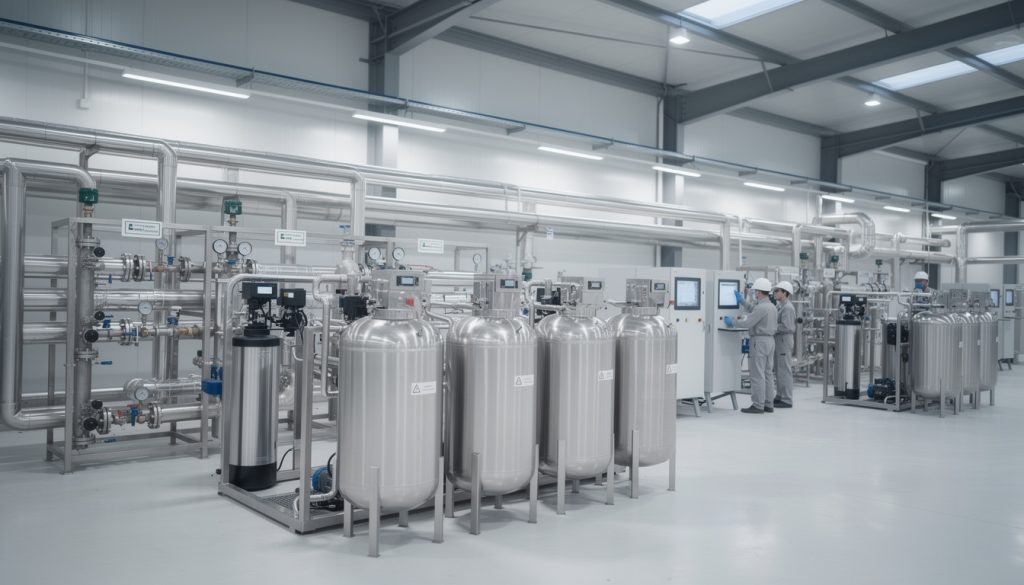
What is commercial water softening and why is it needed?
Commercial water softening removes mineral ions, primarily calcium and magnesium, from water in commercial and industrial settings through ion exchange technology. This process prevents scale formation on heating elements, pipes, and fixtures while improving equipment longevity and enhancing the efficiency of heating systems and detergents.
Hard water creates significant operational challenges for businesses, including increased energy consumption due to scale buildup on heat transfer surfaces. Pipe blockages from mineral deposits restrict water flow and require costly repairs. Equipment breakdowns occur more frequently when hard water minerals accumulate in boilers, water heaters, and other water-using appliances.
Hotels benefit from softened water through improved guest satisfaction, as soft water prevents spotting on glassware and fixtures. Restaurants experience better dishwashing results and reduced chemical usage. Commercial laundries achieve superior cleaning performance while using fewer detergents. Manufacturing facilities protect expensive machinery from scale-related damage and maintain consistent production quality.
How do commercial water softeners work?
Ion exchange technology powers commercial water softening systems through specialized resin beads that attract and capture hardness-causing mineral ions. These synthetic resin beads exchange calcium and magnesium ions for sodium or potassium ions, effectively removing problematic minerals from the water supply and producing consistently soft water.
The resin bed maintains a finite working capacity before reaching saturation with hardness minerals. When the resin becomes fully loaded with calcium and magnesium ions, the system requires regeneration to restore its softening capability. This cyclical process ensures continuous soft water production for commercial operations.
What is grains capacity for water softeners?
Grains capacity represents the total amount of hardness, measured in grains per gallon, that a water softener can remove before requiring regeneration. This measurement serves as a fundamental specification for commercial water softening systems, directly influencing system sizing and regeneration frequency calculations.
A typical commercial softener might have a capacity of 30,000 to 100,000 grains or more, depending on the size and application. Understanding grains capacity helps facility managers select appropriate equipment for their specific water hardness levels and usage patterns.
Why is regeneration essential for water softeners?
Regeneration restores the resin's ability to soften water by flushing accumulated hardness minerals from the resin bed using a concentrated salt solution. During this process, the brine solution strips away calcium and magnesium ions while recharging the resin with sodium ions for the next softening cycle.
Without proper regeneration, industrial water softener systems would quickly lose effectiveness and allow hard water to pass through untreated. The regeneration process ensures continuous operation and maintains consistent water quality for commercial applications.
What problems does hard water cause in commercial buildings?
Limescale deposits form rapidly on heating elements, pipes, and fixtures in commercial buildings with hard water, reducing heat transfer efficiency and restricting water flow. These deposits create insulating barriers that force heating systems to work harder, increasing energy consumption and operational costs.
Commercial cleaning processes suffer when hard water interferes with soap and detergent effectiveness, requiring increased chemical usage and extended wash cycles. Spotting and filming on dishes, glassware, and surfaces create appearance problems that affect customer perception and require additional labor to address.
Boilers, water heaters, cooling towers, and heat exchangers experience accelerated wear and reduced lifespan due to scale formation. HVAC systems lose efficiency as mineral deposits accumulate in pipes and heat exchangers. Dishwashers and warewashing equipment require more frequent descaling and component replacement, increasing maintenance costs and downtime.
How do businesses determine if they need a commercial water softener?
Businesses should conduct professional water testing to measure hardness levels accurately and identify specific water quality issues affecting their operations. This testing provides baseline data for evaluating potential solutions and calculating return on investment for water treatment equipment.
Common indicators suggesting the need for commercial water softening include frequent descaling requirements for equipment, mineral buildup on fixtures and surfaces, increased soap and detergent usage, and reduced efficiency of water-using appliances. Maintenance records showing premature equipment failure or excessive cleaning chemical costs often correlate with hard water problems.
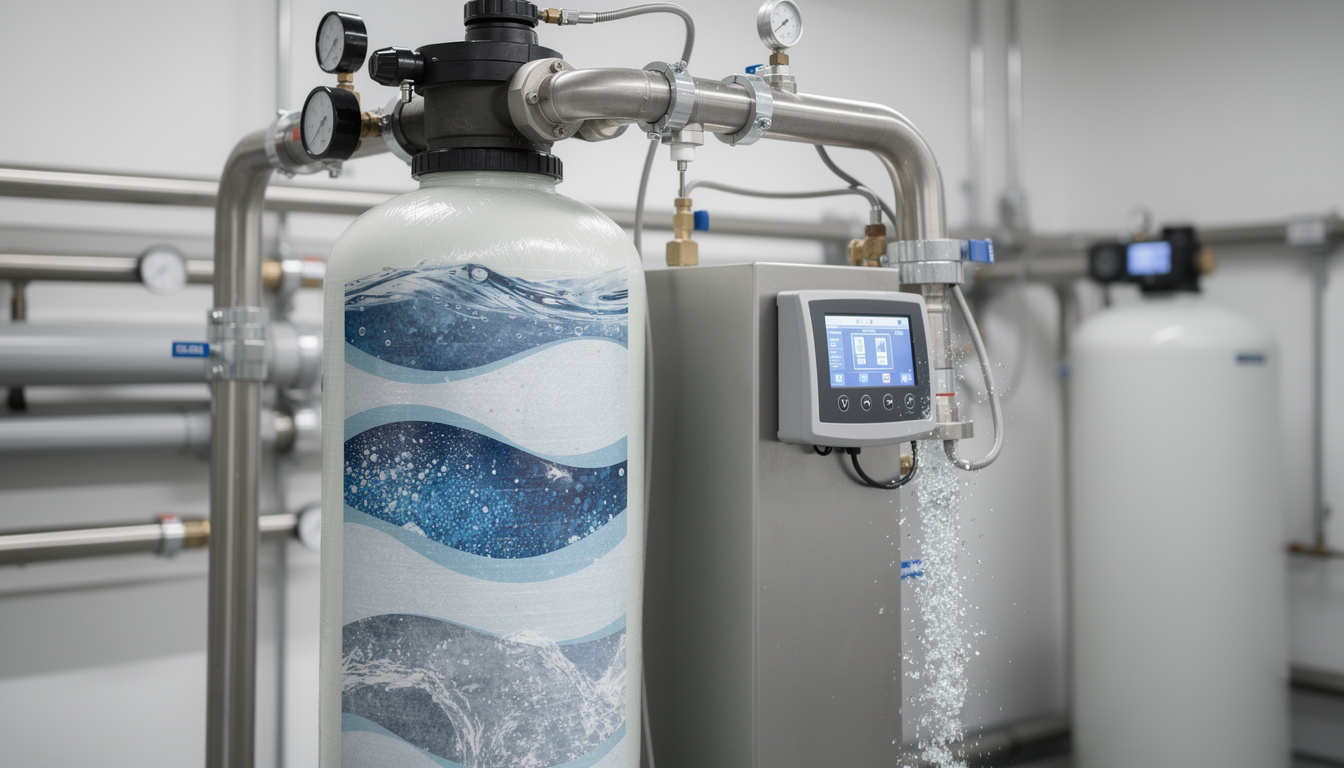
What does hard water mean for businesses?
Hard water contains dissolved calcium and magnesium minerals measured in grains per gallon or parts per million. Water hardness exceeding 7 grains per gallon generally causes operational problems for commercial facilities, while levels above 10 GPG create significant challenges requiring immediate attention.
The geological composition of local water sources determines hardness levels, which vary significantly across different geographic regions. Businesses located in areas with naturally hard water typically experience more severe scaling problems and benefit most from commercial water softening systems.
What commercial equipment is most sensitive to hard water?
Boilers and steam generators face immediate efficiency losses and potential failure when hard water creates scale deposits on heating surfaces. Heat exchangers in HVAC systems lose thermal transfer capability as mineral deposits accumulate. Industrial dishwashers and steam ovens experience performance degradation and require frequent maintenance when operating with hard water.
Coffee machines, ice makers, and other food service equipment develop internal scaling that affects taste quality and equipment reliability. Cooling towers and chillers suffer from reduced heat transfer and increased energy consumption due to mineral buildup on heat exchange surfaces.
How to size a commercial water softener system
Proper sizing prevents both undersized systems that cannot meet peak demand and oversized systems that waste salt and water during regeneration. The sizing process requires calculating peak flow rates in gallons per minute and determining total hardness removal requirements over specific time periods.
Regeneration frequency and redundancy considerations ensure continuous soft water availability during peak operational periods. Accurately sized systems maintain consistent water quality without performance drops during high-demand situations while optimizing salt and water consumption.
| Water Hardness Level | Daily Usage (Gallons) | Required Capacity (Grains) | Recommended System Size |
|---|---|---|---|
| 10 GPG (Moderate) | 1,000 | 10,000 | 30,000 grain unit |
| 15 GPG (Hard) | 2,000 | 30,000 | 60,000 grain unit |
| 20 GPG (Very Hard) | 3,000 | 60,000 | 120,000 grain unit |
| 25 GPG (Extremely Hard) | 5,000 | 125,000 | 200,000 grain unit |
Step 1: Measure water hardness and convert units
Accurate water hardness measurements provide the foundation for proper system sizing calculations. Testing should measure total hardness including calcium, magnesium, and any iron content that affects softener performance. Converting between grains per gallon and parts per million requires multiplying PPM by 0.058 to obtain GPG values.
Step 2: Estimate peak daily and hourly water usage
Peak flow rate calculations differ significantly from average usage patterns and must account for simultaneous operation of all water-dependent equipment during busy periods. Restaurants experience peak demand during meal service, while hotels see highest usage during morning checkout periods. Manufacturing facilities require analysis of production schedules to identify maximum flow requirements.
Step 3: Calculate required capacity and optimal regeneration frequency
Total grains removal calculations multiply daily water usage by water hardness to determine the softener capacity needed. This calculation guides regeneration scheduling to balance salt efficiency with consistent water quality. The optimal regeneration frequency depends on usage patterns, with high-demand facilities requiring more frequent regeneration cycles.
What maintenance does a commercial water softener require?
Regular maintenance prevents salt bridging, resin fouling, and inefficient regeneration cycles that compromise system performance. Consistent maintenance schedules extend equipment lifespan and ensure reliable soft water production for commercial operations.
Professional servicing identifies potential problems before they cause system failures or water quality issues. Preventive maintenance costs significantly less than emergency repairs and equipment replacement while avoiding operational disruptions.
Weekly and monthly checks for water softeners
Salt level monitoring ensures adequate brine solution for regeneration cycles, with salt levels maintained above the water line in the brine tank. Visual inspection for leaks around valves, connections, and the tank itself prevents water damage and salt waste. Basic water hardness testing downstream confirms proper system operation and alerts operators to potential problems.
Quarterly and annual service for commercial systems
Brine tank cleaning removes sediment and debris that can interfere with proper regeneration. Injector and control valve inspection ensures proper brine draw and regeneration timing. System calibration verification confirms accurate hardness measurement and regeneration triggers.
Annual professional inspections provide thorough diagnostics including resin bed analysis, flow rate verification, and control system testing. These comprehensive evaluations identify wear patterns and recommend component replacement before failures occur.
Beyond softening: Scale prevention and alternative treatments
Alternative water treatment methods address scale formation without complete mineral removal, offering solutions for businesses with specific regulatory or operational requirements. These approaches may benefit facilities where discharge regulations restrict salt-based regeneration or where partial scale control meets operational needs.
Modern scale prevention systems provide options for facilities requiring specialized water treatment approaches. Some manufacturing processes actually require certain mineral content, making traditional softening unsuitable. Water treatment specialists can evaluate these alternatives and recommend appropriate solutions for specific applications.
What is the difference between water softening and scale prevention systems?
Traditional water softening physically removes calcium and magnesium minerals through ion exchange, producing water with minimal hardness content. Scale prevention systems alter the crystal structure of hardness minerals without removing them, preventing scale formation while maintaining mineral content in the water.
Magnetic, electronic, and template-assisted crystallization systems change how minerals behave without chemical addition or regeneration requirements. These systems require less maintenance than traditional softeners but provide different levels of scale control depending on water chemistry and application requirements.
What is commercial water conditioning?
Commercial water conditioning encompasses various treatment methods that modify water properties without necessarily removing specific minerals completely. These treatments may include filtration, pH adjustment, and specialized scale inhibition technologies tailored to specific facility requirements.
Conditioning methods often serve as complements to traditional softening or as standalone solutions for applications with unique water quality needs. Professional water treatment specialists evaluate facility requirements and recommend appropriate conditioning approaches based on water chemistry, equipment sensitivity, and operational goals.
Can a water softener remove iron and manganese?
Standard ion exchange softeners effectively remove low levels of dissolved ferrous iron and manganese, typically up to 3-5 parts per million depending on system design. Higher concentrations or oxidized forms of these metals require dedicated pretreatment to protect softener resin from fouling and maintain system efficiency.
Iron and manganese contamination can rapidly degrade resin performance and create taste, odor, and staining problems. Specialized hard water treatment solutions address these contaminants through oxidation, filtration, or specialized resin systems designed for iron and manganese removal. Modern manufacturing processes, similar to precision machining operations, require consistent water quality to maintain product standards and equipment performance.
AQUAPHOR Professional (APRO) is a water treatment technology company, part of AQUAPHOR Corporation, specializing in customizable water purification solutions for industrial and commercial sectors worldwide.
How often should commercial water softeners regenerate?
Regeneration frequency depends on water hardness, usage patterns, and system capacity. Most commercial systems regenerate every 1-3 days, with high-demand facilities requiring daily regeneration during peak seasons.
What size commercial water softener does a restaurant need?
Restaurant softener sizing depends on seating capacity, kitchen equipment, and local water hardness. A typical 100-seat restaurant with moderate hard water requires a 60,000-80,000 grain capacity system.
Can hard water damage commercial dishwashers permanently?
Yes, hard water scale buildup can permanently damage heating elements, spray arms, and internal components of commercial dishwashers. Regular descaling and water softening prevent this damage and extend equipment life.
What is the difference between industrial and commercial water softeners?
Industrial water softeners handle larger volumes and harsher conditions than commercial units, often featuring redundant systems, specialized controls, and materials designed for continuous heavy-duty operation in manufacturing environments.
More Online Resources: https://aquaphorpro.com/